Showing posts with label Musique. Show all posts

Thursday, August 1, 2013

Ray Manzarek; another rider on the storm


Rainfall, thunder, and an impossible bass line to accomplish on the bass guitar —E Minor followed by an A Major, achievable only on Ray Manzarek’s keyboard—, with John Densmore’s jazzy backbeat tagging along, are the inaugural notes of the melody. And again, Manzarek; this time imitating nature with the aqueous sounds coming out of his instrument.
     “Riders on the storm, riders on the storm,” sings the cavernous voice, “into this house we’re born, into this world we’re thrown…” And thus we start our midnight journey through the stormy desert, on a horse named destiny; at least in Jim Morrison's Blakean mind. 
   Well, Ray Manzarek has joined now Morrison in something far more transcendental than music: death. After succumbing to some kind of liver cancer, in a battle that he fought without many of us, who once loved him, knowing about it.
     Ray Manzarek, the man who seemed to be reading mysteries in the keyboard of his Vox Continental organ, and the one who had that personal way of playing the jazzy chords that gave The Doors its distinctive sound and a different vibe to rock music —and also the man who was, apparently, more tolerant than anyone else towards Morrison’s antics and erratic behavior—, has left this world.   
      Who's going to forget that killer staccato strut that opens for the Lizard King on “When the Music’s Over,” where Manzarek’s musical swagger has us trembling with anticipation, making us feel like we're about to take part in a scene out of a Michael Antonioni’s movie. Then, Densmore’s drum roll ushers the pandemonic riff of Robbie Krieger’s guitar, in unison with Morrison’s “otherworldly howl.”
     Those are just two examples of the musical marriage of Jim Morrison’s voice and poetry, and Ray Manzarek’s music; with the other two acting as best men. Not to mention the haunting piano solo on "Crystal Ship" that follows Jim’s —also haunting— vocals, after he sings: “The days are bright and filled with pain, enclose me in your gentle rain. The time you ran was too insane, we’ll meet again, we’ll meet again…”
     Indeed, the days were bright and filled with pain in the sixties. And the youth had to seek refuge in the “gentle” rain of hallucinogens and all the mind altering substances they could get their hands on; to escape from the reality of the times: Vietnam, women’s liberation, sexual freedom, etcetera. The slogan: “We want the world and we want it now.” And to prepare for that, the counterculture generation kept turning on, tuning in, and dropping out left and right. 
     Ray Manzarek and Jim Morrison were a product of their time. As contemporaries they were two comrades who shared some of the most precious days of their youth together. They both had intellectual aspirations, they both had a penchant for the representative world of images and theatrics, and they also — together— were the first ones to contemplate the possibility of forming a band that would exploit Jim’s Nietzsche-Blake influenced poetry, which made them millions of dollars in the process. The rest is history.
     Unfortunately, Manzarek’s musical legacy was overshadowed by the —musically— erratic behavior of his last years, when he and Robby Krieger went on the road with The Doors of the 21st Century, a band that featured The Cure’s Ian Astbury as replacement for Jim Morrison —in full regalia—; which puts them “up there” with the Queen of Paul Rodgers. In his new book, "Doors Unhinged," John Densmore claims that on one occasion Morrison accused Manzarek of being, “only in it for the money.” And it kind of gets you thinking when you see him onstage, in his older years, indulging on some sort of acrobatics that he wouldn’t even dare to think about in his years with the original Doors; you know, when music seemed to matter the most, and there was only one front man.
     Manzarek stated in an interview that "Riders on the Storm" was the very last song that Jim Morrison, “recorded on this planet.” Actually, I think it was also the last real song that Ray Manzarek himself recorded on this planet. After his demise, it feels like they have entered together the dark, pitch-black, night; and they’re out there together as two riders on the storm…


Thursday, March 29, 2012

Serrat y lo significativo de lo insignificante


Tendría yo algunos siete u ocho años cuando mi hermano llegó con el disco de 45 revoluciones. La canción era Señora, de Joan Manuel Serrat: “Ese con quien sueña su hija, ese ladrón que os desvalija de su amor, soy yo, señora…” Eso fue todo, y a pesar de ser un niño no necesite oír nada más para pensar que el que cantaba era un tipo petulante; y si hubiera sido yo argentino hubiera pensado que Serrat era un boludo atorrante.
     El lado B constaba de la canción De cartón piedra, pieza que, al igual que Señora, llegaría yo a amar algunos años más tarde.  Y es que para el joven de diecisiete años, ejercitado en el arte de soñar y de querer ser, Joan Manuel Serrat ya no era un tipo petulante, sino un guía de sueños y conjeturas juveniles. Porque fue a los 17 cuando me reencontré con su música, y esta vez llegó para quedarse conmigo, aun cuando no la escuche. Porque las letras de sus canciones son poemas recitados constantemente, como parte de mi amor por el idioma español.
     Cuando escuchamos una canción de Serrat son muchas cosas las que apreciamos: la poesía de sus letras, su voz enérgica, su fraseo y su forma de tratar las notas musicales. Elementos que se conjugan para darle magia y poesía a su descripción de actos aparentemente insignificantes de la rutina y a las cosas simples de la vida; y el amor en sus mil manifestaciones cobra preeminencia.
     Como dato biográfico principal usaré el comienzo de la canción A quien corresponda, que abre el álbum En tránsito, uno de sus mejores: “Un servidor, Joan Manuel Serrat, casado, mayor de edad, vecino de Camprodón, Girona, hijo de Ángeles y de Josep, de profesión cantautor y natural de Barcelona. Según obra en el Registro Civil, hoy, lunes, 20 de Abril de 1981 con las fuerzas de que dispone atentamente expone dos puntos…” en éste disco Serrat se presenta también como un denunciante de desaguisados ambientales e injusticias sociales. “El mundo es de peaje y experimental, que todo es desechable y provisional”, dice, para luego agregar hacia el final de la canción: “Se sirva tomar medidas y llamar al orden a esos chapuceros, que lo dejan todo perdido en nombre del personal”.  En otras palabras: “imbéciles, están usando el mundo como un laboratorio y alguien tiene que tomar cartas en el asunto, antes que los rufianes con licencia acaben con todo”.
     Fue Serrat el gran complemento a la música de Los Beatles y Moody Blues, y a las lecturas de Herman Hesse, Benedetti y, desde luego, Antonio Machado, de mi temprana juventud.
     No tengo una canción favorita de Serrat porque cada una de ellas tiene su momento; Penélope, Mi niñez, Aquellas pequeñas cosas, Las malas compañías y tantas otras que aun hoy, en la edad madura, asisten a la memoria en su revirar hacia a los mágicos momentos de la niñez y de la tierna adolescencia.
     Para cerrar este pequeño reconocimiento, quiero enfatizar que la música de Joan Manuel Serrat es parte esencial del lenguaje y cultura hispanos, y que sus canciones interpretadas por él mismo son referente obligado para los que en verdad disfrutan el idioma español --y el castellano, desde luego--, sean estos mexicanos, centroamericanos, sudamericanos y… tal vez hasta los españoles.

Wednesday, November 30, 2011

George Harrison, the not-so-quiet one


It’s been ten years now since George Harrison’s departure from this world, and after all this time we can still feel his musical presence fresh and strong, as the great composer and accomplished musician in his own right that he was. We also remember him for his soulfulness and special gift for melody, because the radio still treats us to songs like “My Sweet Lord”, “Isn’t a Pity,” and the warm-hearted “Crackerbox Palace.”  Even not so “commercial” tunes like “Give me Love” or “What Is life” are played by some of the hardcore classic rock or alternative music stations of the area.  
     It’s hard not to think about George every time we hear a slide guitar lick or the sitarish sounds of raga rock, that were so recurring in the guitars of some of the most prominent bands of the sixties.
     It was George Harrison who, as a 14-year-old kid, was able to leave a cocky young man by the name of John Lennon perplexed, just by playing Bill Justis’ “Raunchy” in its entirety; and he was also the one who, early in his career, came up with such solid guitar riffs, as the lead guitar for the greatest rock & roll band of all times. But as the “quiet Beatle,” George was also the great artist whose talent and musicianship was always overshadowed by John and Paul’s musical genius; a curse that somehow followed him even after the Beatles’ split --the high price he had to pay for being surrounded by mastery. 
     A curious thing is that, after the “mop heads” disbanded and everyone started putting out solo projects, it was George who produced the first number-one hit with “My Sweet Lord,” from the triple album “All Things Must Pass.”  And even before that, in what came to be the Beatles' coda, Abbey Road, are two of Harrison’s songs that stand out as some of the brightest highlights of the album: “Here Comes the Sun” and “Something”, the latter which Frank Sinatra hailed as one of the most beautiful love songs ever written. But, in a common display of thoughtlessness, Ol’ Blue Eyes attributed it to Lennon and McCartney.   
     It is hard to pinpoint what made Harrison’s music so moving and soulful, but it might have to do with his particular views on love and humankind. There was something about his music that, even when he could get preachy and condescending --but always insightful--, it always bore a special kind of touch. Songs from his Beatles years like “I Want to tell You,” “If I Needed Someone,” and “The Inner Light”, or some of his compositions as a soloist, like the aforementioned “Give Me Love” and “When We Was Fab,” are pieces that reveal the artist’s great sensibility and musical wit; not to mention his awesome sense of melody. 
     There are two songs that I would recommend to anybody still doubting the Beatles’ inventiveness and versatility, both of them composed by George: “Within You, Without You” and “Blue Jay Way.” He wrote the former around the time when he was getting immersed in Eastern philosophy, which would, in turn, become his religion. Although debate is still around as to who invented raga rock or who played it first, the truth is that his version of it had more purist overtones than “mainstream” raga rock, which also added a mystique to the Beatles’ image as a rock band, by being bold enough to put a song with that kind of musical demeanor in a rock/pop album. Of the latter, all I will say is that the chorus and the orchestral arrangements give such an eerie quality to it, that made not only for a very original piece, but the feelings produced by it were very much in tune with the times --second half of the sixties-- the world was living. 
     Another thing that has gone mostly unrecognized about Harrison is his rocker facet and his qualities as a very distinctive and stylish vocalist. He was the one who played some mean rockabilly-influenced guitar riffs and, with that voice that contained a strong liverpudlian accent, he was perfectly apt to tag along with such a rock & roll master as Carl Perkins --with his trademark southern drawl-- in songs like “Your True Love” or “Glad all Over.” 
     Actually, we could say that George inherited the virility of rockabilly from Perkins himself and we can hear it in songs of his own making like “Don’t Bother Me,” and in covers like “Roll Over Beethoven,” which wasn’t a Perkins song, but it shows how The Beatles were able to capture audiences so early on in their career for the virility of their sound. Despite his rather-vulnerable-voice, Harrison can keep up with the toughness of any hardcore rock 'n' roller on roughneckies like “Honey Don’t” or “Everybody’s Trying to Be My Baby”.
     George’s legacy is a huge one --although overlooked and underrated--, in and outside of the Fab Four, because he was a team-player; which is probably what better explains the fact that he was willing to stand behind John and Paul for so long. He had excellent collaborations with other artists in songs that he co-wrote with people like Eric Clapton (“Badge”), Ronnie Wood (“Far East Man”), and Ringo’s “Photograph” that was quite a work of art in itself  --and Ringo’s first number-one hit-- for its great music arrangements. And, of course, we have his collaborations with supergroup Travelling Wilburys, whose songs like “Heading for the Light,” “End of the Line,” and “Handle with Care,” --of George’s co-authorship-- stuck out dearly.
     So yes, George Harrison was a consummated artist, whose merit was sorrily overlooked by the ones who only wanted bubble-gum music from him, and who encased him in that image of the pop star, who was good until they found out that he could think; then, they looked away in search for the next easy-to-digest cheap thrill. 
     As a closing note, I want to add that, with the Concert for Bangladesh George was the first one to do a big-scale charity concert with real, pure intentions --are you listening Bob Geldof?--; which, unfortunately, turned into a nightmare for him, thanks to bureaucracy and the bunch of free-loaders that made themselves present as soon as they learned that it could be an open game. “And while you’re in this world, the fuzz gonna come and claim you...”

George Harrison music for appreciation (probably on YouTube):
“Isn’t a Pity”
“Wah-Wah”
“Don’t let Me Wait Too Long”
“The Answer’s At the End”
“World of Stone”
“This Song”
“Hari’s on Tour”
“Ding Dong, Ding Dong”
“Far East Man”
“Love Comes to Everyone”
“Cheer Down”
“Crackerbox Palace”
“When We was Fab”
“Rising Sun”
“Stuck Inside a Cloud”

Note: This article appeared originally on a now defunct online magazine and I wrote it on account of George Harrison's death anniversary.

Agustín Lara, genio y figura


Al oír el nombre de Agustín Lara, evocamos presto la imagen del hombre enjuto enfundado en su smoking oscuro y sentado frente al piano; figura semejante a esas pequeñas estatuillas de Mozart y Beethoven que uno se encuentra en los bazares. En su rostro, una expresión de melancolía, acentuada por la cicatriz que le recorre la mejilla izquierda. Ya fueran sus canciones conocidas a través de la voz de Toña “La Negra”, Pedro Vargas, o de algún cantante de fama internacional como Frank Sinatra. Agustín Lara es, hoy por hoy, uno de los baluartes de la música romántica en el mundo de habla hispana; y dueño también de una leyenda que se extendió más allá de su genio musical. 
     Incluso, algunas frases de uso popular en México tales como: “acuerdate de Acapulco”, “para calmar sus ansias de novillero” ó “sueño guajiro” se desprenden de canciones de Lara. Quién no ha oído melodías como Solamente una vez o Farolito, sin asociarlas inmediatamente con el gran Flaco de Oro.
     Y debe Lara su leyenda a la combinación de varios factores; entre los cuales se cuentan su matrimonio con María Félix, su cursilería y algunas historias que se han tejido alrededor de su persona. Pero fue, sobre todo, su versatilidad musical la que lo llevó a escalar alturas insospechadas, ya que lo mismo componía épicos cantos para la fiesta taurina, que desgarradoras canciones de amor, inspiradas por sus musas de lupanar, haciendo acopio siempre de una retórica florida o alucinada, según ameritara el caso. 
     Un buen ejemplo de la cursilería legendaria del Flaco lo da la anecdota que se contaba acerca de su rompimiento con Maria Felix, con la que estuvo casado algo así como un año. Como despedida le envió flores a la Doña, con una nota que decía: “Son novecientas noventa y nueve rosas; tú eres la número mil... y tú sabes que odio las rosas.” 
     Otros rumores son que fumaba mariguana y que él no componía todas sus canciones sino que algunas las compraba; esto último fue medio confirmado por José el Chino Ibarra (uno de sus músicos), en una entrevista con Cristina Pacheco, en la que el Chino dice que, efectivamente, un compositor conocido como el Chamaco Sandoval  era co-autor de varias de las canciones de Lara. Lo de la mariguana nunca se confirmó “oficialmente”, pero el galimatías de algunas de sus letras --con sus “palmeras borrachas de sol” y sus “aromas de carabalí”-- como que no deja mucho lugar para dudas. Habrá que recordar que su campo de acción era entre el cabaret y la plaza de toros; y muchas cosas podían pasar en el trayecto de uno a otro. 
      Sus interprete de cabecera fue Toña la Negra, pero hubo algunos otros que también lo interpretaron magistralmente, como el arriba mencionado Pedro Vargas, Juan Arvizu y hasta Javier Solis, quien nos diera un gran regalo con los dos discos que grabó exclusivamente con canciones de Lara: “Fantasia Española” y “Javier Solís interpreta a Agustín Lara”. Dos joyas musicales que, atreviéndome a sonar bárbaro, catalogaría yo como música Mariachi-Ambient o Impresionista, ya que los extraordinarios arreglos musicales de ambos nos recrean la atmosfera de España y de la costa Veracruzana; que son  sus temas respectivos.
     La voz lánguida y desgarrada, que hacía perfecta comparsa con el violín dolido de Laurito Uranga, y la trompeta con sordina del Chino Ibarra, son un deleite del que se han perdido todos los que no han escuchado las canciones de Agustín interpretadas por él mismo. Con esa combinación de elementos que daban un tono afligido y fatalista a su música, Lara representó el espíritu decadente de la época; del amante cursi y pasional que, con el testimonio aun vivo de un Manuel Acuña, sentía la obligación de llevar la experiencia amorosa a sus últimas consecuencias; como la misma cicatriz en su cara lo atestiguaba.  
     Fue también él, quien hizo de la frustración amorosa un sofisticado deleite masoquista con canciones como Sólo una vez, de la que se desprende: “Por ser tu vanidad tan exquisita, con toda tu maldad y tu altivez, daría toda mi sangre muñequita porque tú me besaras otra vez”, elogiando lo inasible. O versos tales como: “Arráncame la vida en el último beso de amor” y “mis pobres manos alas quebradas, crucificadas bajo tus pies”, de Arrancame la vida y Pobre de mí, respectivamente; que fueron una gráfica representación de la psique de éste mártir de la pasión.
     Para cerrar la nota, cabe mencionar también que, cursi o no, Agustín Lara se ganó a pulso el título de “Músico Poeta”, porque en su obra abunda la poesía, de lo cual dejó  testimonio innegable en líneas tan hermosas como: “Veracruz, son tus noches diluvio de estrellas, palmera y mujer”, de Veracruz; y en la canción Suerte loca, que dice: “Ay corazón, a un amor no te entregues entero, tras las rosas estan las espinas y te acecha un puñal traicionero”. ¿Me estás oyendo inútil...?

Nota: Este texto apareció originalmente en una revista en línea, ahora extinta.

Monday, November 28, 2011

Kurt Cobain came as he was


Kurt Cobain would be 53 this month, had he managed survive his environment and were still with us. We remember his music, not only for its distinctive sound, but also because, although rock bands have come and gone, after Nirvana nothing really big has happened. Everything has been pretty much just incidental in the music world these days. Yes, Nirvana was the last big music news in the past three decades, whether we like it or not.
     It was almost thirty years ago, in the Summer of 1991, when I was going door to door selling Kirby vacuum cleaners around the dusty neighborhoods of El Paso. The guy who drove us around in a van would pick us up a few blocks down the street, and he was always playing KLAQ, El Paso’s contemporary rock station and the most popular in the area. I’ll never forget how, after a “nice” walk under the already warm sun of early afternoon, the first chords of “Lithium” struck me like no other music had done in a long while. 
     It starts with the opening guitar riff, which projects such vigor and appeal that entices you enough to drop anything you’re doing and give your undivided attention to it. Kurt’s calm, yet unreassuring voice shares what goes on inside his head. And after a few statements on his “optimal” present condition, he starts yelling “Yeah! Yeah!” repeatedly, taking the listener by surprise. Then he’s back to his calm state… before eventually cracking again. I knew right then and there that rock music wouldn’t be the same anymore.
     Lithium is a drug used to treat patients with Bipolar Disorder, a mental health condition in the category of Mood Disorders.  And, aside from the title, in its contents the song also alludes —unconsciously, perhaps— to the mental state of bipolar people. The singer announces that he is happy, but then, without warning, he goes off in a sort of manic-psychotic outburst. It kind of reminds us of Sartre’s Nausea, were the main character rants endlessly in his diary about his disgust for life. But then, when least expected, he is in such a gay mood that he would close a day’s entry by writing “I am happy”.
     Then, along came “Smells like Teen Spirit” (from the same album, Nevermind), the song with which Nirvana kissed the 80’s and heavy metal goodbye.  Music wasn’t mostly about partying and getting laid anymore, but the soundtrack to the new era of nihilism and hopeless desperation that had been born with the new generations.  And this time it wasn’t Pink Floyd’s quiet desperation, but rather a loud one. Nor was it the same as Jim Morrison’s “we want the world, and we want it now” attitude, either; but rather the apathetic and indifferent detachment of “Whatever, dude. You can take your world and shove it.” The rest is history.
     Little did I know that about 15 years later, I would live in Washington State, and I'd be visiting Aberdeen, Kurt's hometown, a few times a week for almost 2 years; on assignments as an English-Spanish interpreter. I also did a couple of assignments in the old hospital where Kurt was born, and got to see the house where he grew up and the bridge under which he used to hang out before fame. As you approach Aberdeen, a big sign welcomes you into town. The sign reads: "Welcome to Aberdeen. Come As You Are." Aberdeenians are some of the coolest people I've ever met; very nice and easy going.
     There are rock songs whose opening chords say everything about them right off the bat, like “American Woman,” “Layla,” and “Smoke on the Water,” to name a few. And I would put “Teen Spirit” and “Come as You Are” in the same category. Because, once you’re exposed to the first couple of seconds into them, they grab you and won’t let you off the hook, until you start puking green.
     Nirvana’s music is not about a state of mind only, but it’s also a new expression of music. And, although they used the common elements of rhythm, melody, and harmony —if only in a syncopated and dissonant way—, the one thing that set Nirvana apart from its predecessors and contemporaries was their ability to mix a nice, poppish sound with their punk roots, and a use of melody —in Cobain’s own way— that was prodigal in the midst of existential chaos and angst. The same way that John Lennon was the sixties and Michael Jackson was the eighties; Kurt Cobain was the nineties. And that is something.

Note: This article appeared originally on a now defunct online magazine, and I wrote it on account of Kurt Cobain’s birthday.


Friday, November 18, 2011

Santana y el rock


Hablar de Estados Unidos y de tiempos modernos nos remite irremediablemente a una palabra: fusión.  Hoy por hoy, las cosas cada vez se mezclan más entre sí, y cuando pienso en esto un nombre viene a mi mente: Carlos Santana, el de la guitarra que llora, y que personifica la fusión con todos sus “agravantes”; desde su aspecto físico, su familia birracial, su peculiar manera de hablar --ambos, el inglés y el español-- y, desde luego, su música. Es que, Santana es sinónimo de sensibilidad y de hibridez cultural por donde lo veamos, porque él nunca tuvo a menos su condición bicultural de mexicano en los Estados Unidos y porque además ha sabido aprovechar al máximo lo mejor de ambos mundos, factor al que tanto debe su música. 
     Desde sus inicios allá en Tijuana, cuando tocaba el violin en el conjunto de mariachi de su padre, Carlos se estaba forjando ya un estilo propio, al trasladar el sentimiento extraido del arco y las cuerdas del violin a los viriles rasgueos de la guitarra. Recuerdo yo que aún antes de saber que él habia tocado alguna vez ese instrumento, su sentida forma de tocar la guitarra me recordaba el violín de Laurito Uranga en las canciones de Agustín Lara.
     Otro dato curioso es el hecho que, aún antes de grabar un disco, el estilo depurado y ecléctico de Santana lo llevó al éxito inmediato en el momento que se dió a conocer al vasto público de Woodstock.  Hecho que en sí mismo fue un completo acto de osadía, si tomamos en cuenta que la mayoría de los músicos que tocaron allí eran músicos consagrados y con toda la experiencia del mundo, entre los cuales figuraban The Who, Jimi Hemdrix, The Band, y Three Souls in my Mind... a no perdón, me equivoqué de concierto con estos últimos, porque ellos tocaron en Avandaro. 
     La pieza que escogió para la ocasión --pasadísimo en ácido, por cierto-- fue “Soul Sacrifice” que, aunque nunca ha sido una de mis fávoritas, la puedo usar como ejemplo del Santana’s trademark, porque en ella epitomiza la fusión del sonido afro-antillano --en las percusiones de Chepito Arias-- con  la música rock, en los acordes de esa guitarra que lo mismo podía ser agresiva y exaltada como amable y sutil, pero siempre inspirada; algo parecido a lo que hacía Stan Getz con el saxofón. 
     Un documento musical es la canción “Oye Como Va” del gran Tito Puente, en la que Carlitos, siguiendo el ejemplo de Ritchie Valens con “La Bamba,” logró poner una pieza cantada totalmente en español en los anales de la música norteamericana --y mundial--, traduciendo el español de esta canción al idioma universal de la música.  Fue así que el músico  consolidó la unión del ritmo latino con la música rock, logrando gran parte de ello al sustituir los metales de la original por unos enérgicos riffs de guitarra.  Amén de haber convertido una canción étnica en una joya del rock & roll.
     Ahora, como guitarrista Santana no está mal, al punto que nunca se le ha notado timidez alguna cuando ha compartido escenarios con monstros sagrados de la guitarra tales como Eric Clapton o Jeff Beck, entre otros.  Derroche de autoestima musical que se debe  al hecho de tener un estilo muy propio y de su capacidad prodigiosa de decir con su música lo que siente, de una forma concisa y económica.  Las notas de su guitarra, que a veces son prolongadas pero nunca excesivas, evocan el sentimiento del violin en melodías como “Samba pa’ ti” y “Europa”. Lo que da testimonio de una sensibilidad extraordinaria y demuestra, además, que no se requiere de toda la pericia y ostentación musical para hacer algo con lo que se tiene, y proyectar lo que se quiere.                            
     Y hablando de alfareros de Capdepera, quiero señalar que la inspiración de “Europa” proviene de una de las bandas pioneras de la música “grupera”; me refiero, ni más ni menos, que a los Angeles Negros con su canción, “Y volveré”.  Desde luego que eso es de cuando a la “música” grupera todavía se le podía llamar música, if you know what I mean.  
     Como sea, quise usar ese dato para ilustrar una vez más la capacidad asimilativa de Carlos Santana quien, haciendo honor al dicho que reza, “el que entre lobos anda, a aullar se enseña”, no ha dejado de aprender de todos los viejos lobos de mar con los que se ha cruzado en su vida --y esto incluye a los que sólo a podido percibir a distancia--, cosa que ha hecho de él, para deleite de miles, un digno representante de la música con todas sus variaciones y mezclas.

Nota: Este artículo apareció originalmente en una revista en línea, ahora extinta, y lo escribí a razón del tema “Fusión”.

Sunday, November 13, 2011

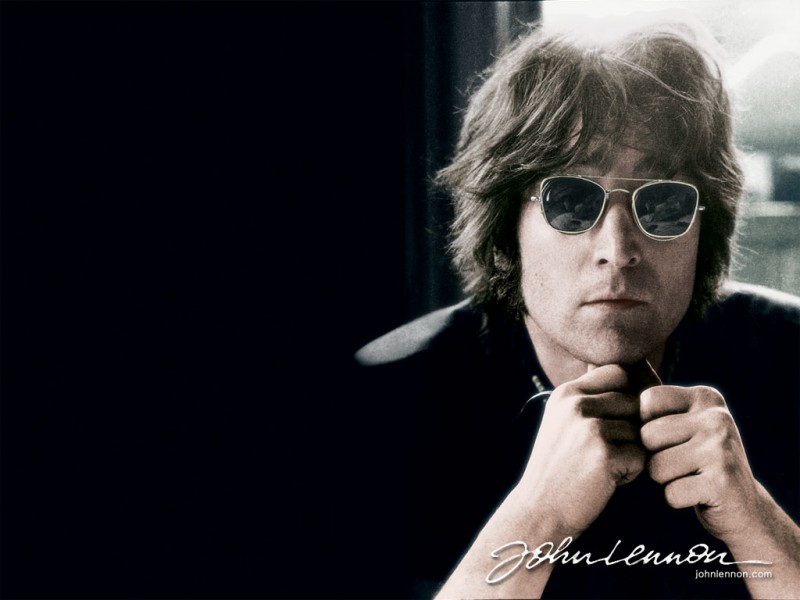
John Lennon after the walrus


A lot of people still remember what they were doing on the night of December 8, 1980; a night that marked modern history forever when John Lennon was assassinated.  The career of the founder of the greatest rock 'n' roll band of all times, and undisputable spokesman of the sixties, had been shut down forever and with him a whole generation’s dreams. But the name grew also, and the dream John Lennon and the Beatles set out to conquer acquired mythical proportions that were closer to the truth than the myth:  their accomplishments were real and stayed with us through their music.
     I was in fourth grade when my friend Ramón came to get me for school, and his face had a somber expression when he told me, “John Lennon was killed.”  I had been introduced to Lennon’s music not too long before by the radio’s endless playing of “(Just Like) Starting Over,” and two or three days after his death I got to hear “Woman.”
     From what I heard the following days, John Lennon had been a big deal, because his death produced worldwide shock.  But, was the man as good as his myth had him to be? Or, was he just overrated, living off his Beatles past?  Well, I guess we need to know who he was as a Beatle in order to try to answer those questions.
     As a band, The Beatles' music had unarguably all the right ingredients: harmony, rhythm, and melody; elements that they combined --all the four contributing to that-- with such a natural grace, which gave their sound a feeling of warm and ingenious simplicity that had John and Paul as the masterminds. And with their penchant for experimentation they took their music to higher planes of innovation and inventiveness.
     According to Paul, it was him who introduced John --and we believe him-- to a more sophisticated and complex kind of music. But it was Lennon who actually took the initiative to make a style out of it. Because, while Paul was busy putting out his catchy tunes, John was exploring a more esoteric and experimental aspect of recording.  And it was he also who contributed with most of the work that was paramount to the Beatles’ avant-gardish trademark in compositions like “Tomorrow Never Knows,” “A Day in the life,” “I’m the Walrus,” and “Revolution #9,” to name a few; because John always took things a step further to what most of his contemporaries were doing.
     After The Beatles split John Lennon was the most “promising” of the four, since he had already released “Instant Karma,” a single that made it all the way to number three in the charts, which wasn’t bad at all for a song that was completed in one single day.  At the time he was more active than the other three, not only with his own projects but also jamming around with all kinds of people in the rock scene.  Unfortunately, his “Plastic Ono Band” --one of his best works as a soloist-- wasn’t the commercial success he expected, mainly due to its autobiographical and socially-conscious contents that made it the kind of material masses aren’t dying to collect.  And here resides part of the answer.   
     With the “Imagine” album he had a better idea of what he wanted, as far as making good music and money in the process. Both, the musical and ideological contents of the record were well-balanced; but the number-ones weren’t here yet. At this point it was obvious that Lennon’s political stances were affecting record sales and the concept that a lot of people had of him; especially American people, who didn’t see it right for a foreigner to attack their institutions, even in the form of a greatly corrupt president like Richard Nixon.  When we listen to tunes like “Jealous Guy,” “How,” and “Imagine” we cannot help but wonder why three songs that are so well crafted and appealing to common taste don’t reach number one.  I mean, even Ringo had a number-one hit before John.
     The rest is history. He kept making music, mainly going through the motions, because he seemed to have lost focus as he went along, trying to prove himself he had what it took. And yet another incidental factor was added to the equation: his separation from Yoko, which led to emotional and artistic chaos. Part of the natural outcome of all that was the erratic production --with none other than Phil Spector-- of the disjointed and confused music that would become his Rock ‘n’ Roll and Menlove Avenue albums; which, nevertheless, had a couple of rescuable tunes.
     Another thing that contributed to a bad rating of his work was the fact that he started overproducing his music, stripping it of its natural candor. Two of his records of that period, Walls and Bridges and Mind Games had Lennon’s essence hidden behind the extra polish that he added to tracks such as “One Day at a Time,” “Bless You,” and “Scared,” that would have been awesome works of art, otherwise. If you listen to the Lennon anthology that contains some of the in-the-raw tunes, recorded during band rehearsals, you’ll know what I’m talking about.  
     Paradoxically, it was “Whatever Gets You thru the Night,” out of Walls and Bridges that would give him his first number-one.  Still, he affected the seventies only partially, because in 1975 he went into seclusion --a five year hiatus to raise his newborn son Sean. 
     Then, in 1980 Lennon made his big comeback with two albums: Double Fantasy, with which he closed the seventies forever; and Milk and Honey, the one he greeted the eighties – the most indicated for that -- with.  While the former still bears the candidness of the seventies in gems like “Watching the Wheels” and “Woman” --with their beautiful instrumental embellishments-- the latter has a more simple approach, characterized by the fast tempos of choppy rhythm guitars in songs like “Nobody Told Me” and “I’m Stepping Out,” a sound that was representative of those days. 
     He was ready to start over, and he did so in a big way, as his last works prove. Sadly, the chance of giving any more input to his times was cut short by death.  But John Lennon’s musical and human legacy lives on. And, after all, I think is safe to say that the man and the artist were as big as the name. 

Note: This article appeared originally on a now defunct online magazine, and I wrote it on account of the 30th anniversary of John Lennon's death.

Music suggestions for appreciation (probably on YouTube):
“Isolation”
“How”
“How Can You Sleep”
“Oh My Love”
“Gimme Some Truth”
“Intuition”
“I Know (I Know)”
“One Day at a Time” (from the Lennon Anthology)
“Steel and Glass”
“Surprise, Surprise (Sweet Bird of Paradox)” (from the Lennon Anthology)
“Nobody Loves You When You’re Down and Out”
“I’m losing You”
“Now and Then”
“Grow Old with Me” (Glenn Campbell’s cover)


Michael Jackson is the 80’s


It was the early days of MTV, New Wave music, and breakdance, when the man with the glove and the leather jacket was causing a serious impact on the music world as he Moonwalked across stages around the world.  Twenty five years ago, at the Grammy Awards ceremony, Michael Jackson confirmed his artistic grandiosity to the world by winning all the eight different categories he was nominated for with his album “Thriller;” making it a memorable day in music history, and one the brightest highlights of his career and his life.  The eighties had somebody to represent them now.
     It didn’t matter if you liked his music or not, or whether you’re old or young, Michael Jackson was going to become part of your life one way or another.  Who’s going to forget the historic night of March 25, 1983 (the night of Motown 25), when our eyes were fixed on the television screen, following every single move of Jackson’s body as he danced while lip-synching “Billie Jean.” 
     That night was unforgettable for two main reasons: the electrifying moment he regaled us with and because, although some of us didn’t care for him at the time, he kept us captive watching and listening, and cursing him out because we had other musical interests and there we were “wasting” our time on some “nonsense,” like watching this gloved-dude-in-dark-bright-clothes dance uniquely. 
     He had been around a few years, but it wasn’t until 1979 that Jackson reached his musical maturity with the album “Off the Wall.”  I remember hearing “Rock with You” for the first time, and being very impressed by the longing in Michael’s voice and Quincy Jones’ wonderful orchestral arrangements.  Dance-music wasn’t just about shaking your booty anymore, but it was something you could actually listen to and taste.  Then along came “Thriller,” with all its subsequent stir that dragged through the next decade.  The rest is history.
     But, what’s all that have to do with the price of tea in China?  Well, I am writing this piece on the day that Michael Jackson would be celebrating his 51st birthday (August 29, 2009) if he was alive.  And like many others whose lives were touched by this man’s genius, I feel the need to express my feelings about his music and his life, without having to dwell on the scabrous side of it --that’s what we have the media for.
     I was never his fan.  In fact, there were a lot of things I didn’t like about him. For instance, I never forgave him for acquiring part of The Beatles catalog, especially after hearing “Revolution” used on a Nike commercial; but businesses is business, and let’s not forget that Michael was also a business man.
     And what about all those controversies that this tormented soul created around his own persona, that left a big stain even on his musical legacy?  Well, one thing that we need to keep in mind about his upbringing is the fact that he never had a normal childhood --the formative years-- because, as a child prodigy he couldn’t afford one. And besides, it is his art what I try to think about --hard as it is-- when I think about Michael Jackson, and not the things that made him tabloid material.   
     I am not trying to make an apology, but, honor where honor’s due. One thing we can acknowledge about Michael is that, unlike most children prodigy, he didn’t run out of talent as he grew up.  That’s why the world got to hear about him, and in such a way that, if John Lennon is the sixties and Kurt Cobain is the nineties, Michael Jackson --for better or worse-- was the eighties, and that is something.

 Note: This article, that I wrote on account of Michael Jackson's birthday, appeared originally on a now defunct online magazine.


Saturday, November 12, 2011

Juan Gabriel, el Divo con pastel


En éste mes de enero Juan Gabriel celebra sus 65 años de vida, y más de cuarenta de su surgimiento como uno de los compositores más importantes de habla hispana (su catálogo se compone de más de mil canciones). Con una versatilidad increible, que lo mismo la ha dado para componer balada, ranchera, pop, y hasta una forma de bolero moderno, el “Divo de Juárez” ha sido el impulsador y revividor de varias carreras aparte de la suya propia.
     Juan Gabriel, como sabemos, nació en el estado de Michoacán, pero se crió —y creó— en Ciudad Juárez, Chihuahua. Y la razón por lo que enfatizaría esto último, es debido a que fue su condición de fronterizo la que lo expuso a algunas cosas, que eventualmente serían el gran complemento a su inspiración y talento: la música popular norteamericana y el acceso a una cultura más internacionalista. Elementos que, dicho sea de paso, sostendrían su obra al sacarlo de la rutina de seguir las corrientes española y europea características de la música de su época, que eventualmente serían la piedra de tropiezo para muchos, incluidos los españoles mismos.
     Aunque yo no fui un fan de Juan Gabriel, nunca pude dejar de reconocer su talento artístico. Particularmente me gustaban las canciones que le compuso a Rocio Durcal, siendo “Siempre”, del álbum del mismo título, una de las canciones por las que más afecto he sentido, y cuya producción y arreglos constituyen una verdadera obra maestra, por su imaginería musical, que es digna de la mejor composición impresionista. El hecho que él fuera productor musical de sus discos, y de algunos de los de Rocio, confirmó para mí de alguna forma su genio como artista, teniendo como verdad que el productor es el gran creador musical —o instrumental— de un disco. Phil Spector decía que él hacía mini sinfonías para los chavos; y Juan Gabriel hacía mini sinfonías para el populacho en general.
     A Juan Gabriel le tocó vivir la epoca de los grandes cantautores de la balada, tales como Camilo Sesto, Miguel Gallardo, Jose Luis Perales, Napoleón y Joan Sebastian, entre otros. Y eran los españoles los que practicamente llevaban la batuta en cuanto a hacer canciones, dando a su música siempre ese hermoso toque europeo tan representativo de la época, que era imitado —en mayor o menor medida— por el resto de los compositores y cantantes de habla hispana. Pero fue Juan Gabriel el único que supo renovarse y no morir, al dar a sus canciones giros nuevos de estilo en cada grabación. Porque, como sabemos, la gran mayoría de los otros compositores no sobrevivieron los cambios en los gustos musicales de la gente.
     El mismo Joan Sebastian estuvo sepultado por un tiempo, y fue un disco en estilo norteño el que lo trajo otra vez al gusto general del público. A propósito de Sebastian, me gustaría añadir una observación. Algunas de sus composiciones de los últimos años me impresionaron un poco, pensando que tal vez que estaría escuchando más música, y por ende siendo más ecléctico. Pero al ponerle más atención a algunos detalles, llegué a la conclusión qué acaso él no esté más que utilizando la misma fórmula que Juan Gabriel usó mucho antes; e incluso en algunas de sus piezas la influencia directa es más que obvia.
     Mucho se ha especulado acerca de la orientación sexual del artista, algo que ha hecho que muchos no acepten abiertamente que escuchan su música. Pero una cosa es cierta; la gente que va un concierto de Juan Gabriel siempre acaba dejandose “caer la greña”, como dicen, y los coros completos de la audiencia (ambos, mujeres y hombres) nunca se hacen esperar. Incluso, en los palenques, al final de un concierto muchos hombres siempre salen con una prenda de vestir menos, porque le aventaron el sombrero a Juanga en el escenario.
     El ser un compositor prolífico le ha permitido a Juan Gabriel darse tales lujos como el permanecer en el gusto del público, aún sin grabar discos nuevos; e incluso ser conocido por las nuevas generaciones. Y parte de su ausencia en los estudios de grabación se debe a sus eternas luchas con las compañías disqueras que, fieles a su tradición, se empeñan en quitarle tanto dinero como pueden a los artistas que firman con ellas.
     Sólo huelga decir que, si él quiere, el “Divo de Juárez” puede dormirse en sus laureles. Y aunque no volviera a componer una sola canción más en su vida, su vasta obra le puede redituar lo suficiente para vivir de dos cosas vitales: sus regalías y sus glorias del pasado; y el tiempo restante lo puede dedicar a la busqueda de la espiritualidad que lo sostenga en su vejez. 

Nota: Este artículo apareció originalmente en una revista en línea, ahora extinta, y lo escribí a razón del cumpleaños 60 de Juan Gabriel, en enero del 2010.

Música para apreciación (algunas canciones están en YouTube):
“Mañana te acordarás de mí”
“Nunca lo sabré, nunca lo sabrás”
“He venido a pedirte perdón”
“Yo no nací para amar”
“Insensible”
“Ya lo sé que tú te vas”
“Querida”
“Nuevamente sola” (Rocio Durcal)
“Una oración” (Rocio Durcal)
“El más querido” (Rocio Durcal)
“Siempre” (Rocio Durcal)
“Ya lo pasado, pasado” (José José)
“Quizá mañana” (Aida Cuevas)
“Resulta” (Lucha Villa)


A Day in the Life


“I read the news today, oh boy…” John Lennon sings with his nasal voice, in what’s considered to be one of the biggest monuments of rock 'n' roll music: “A Day in the Life.” The last song on what most critics consider the greatest rock 'n' roll —and pop— album of all times. No, I’m not talking about Thriller; I’m actually talking about Sergeant Pepper’s Lonely Hearts Club Band.
     Every time I listen to “A Day in the Life,” it sends shivers down my spine to hear the first notes from Lennon’s guitar, as it fades in from the roar of the crowd from the previous track on the album. The guitar is immediately followed by the piano, whose initial chords constitute a statement right off the bat; grabbing our attention and preparing us for what’s to come. Ol’ John, in his most peculiar way, sings about a man who “made the grade” and “blew his mind out in a car,” and about a movie where the “English army had just won the war.” His voice and the trippy-absent-minded lyrics —along with the melody— set the tone for a dreamlike atmosphere that will lead us through a surrealistic journey. 
     But, it is the beginning of the second verse, when Ringo jumps into the scene with his syncopated drumming, which confirms, once and for all, that we’re not listening to just another pop song. The composition not only gives us the mini-itinerary of a day in the life of a so-called common guy —remember, it was the sixties—, but also sheds a lot of light on the times of John Lennon’s generation. Everything was happening so fast that you didn’t really know if it was real life or you’re just dreaming.
     Then, the singer makes his intentions apparent: “I’d love to turn you on.” Does it start sounding like the sixties yet? Lennon’s voice, enhanced by the echo, acquires an otherworldly aura to it, which is followed by the flabbergasting bridge —the dissonant orchestral climb that drives all the instruments into an orgiastic frenzy. The alarm clock goes off, and our common guy (in Paul’s voice) gets up and starts his day, by getting on his way to what we assume is work. But, when he got on the bus, he “had a smoke” and went right into a dream… I mean, what’s up with that?
     That is what makes the song so artistically and surrealistically ingenious; the way the Beatles usher us into their universe of gibberish and dreamland. With this masterpiece they didn’t only make sure to get their point across, but they also blended their times, and the times-before-their-time, with the fusion of contemporary pop culture and the classical orchestra ethos. 
     But that’s not it. After Lennon’s discourse on the amount of holes that would take to fill the Albert Hall, he reiterates his intentions: to turn you on. Followed again by a second crescendo, which this time is taken all the way to its final climax; goodness gracious!  
     Then, comes the closing, with the longest note in music history. The piano is resonating in your ears long after Lennon quits singing. And you just want to forget about it; but they wouldn’t let you off the hook that easy.  Sugar plum fairy.

Note: This article appeared originally on a now defunct online magazine.


Ringo, a star at 70


Ringo Starr has celebrated his 70th birthday, and I want to use that as an excuse to celebrate a life marked by charm, hard work, and success; all gathered in the person of this man, who can be considered real rock 'n' roll royalty and a living legend.  And by charm I don’t mean lucky charm, because, contrary to a lot of people’s belief, I don't think that it was luck what got Ringo so high in life, but something very different: talent and perseverance.
     For those of you who don’t know, Ringo Starr became the drummer for the greatest rock 'n' roll band of all times, The Beatles, when he replaced their original drummer, Pete Best. So once the Beatles became rich and famous, people started referring to him as “the luckiest man in the world,” assertion that I would dispute by referring to some statements made by none other than John Lennon.  Mr. Lennon said that the Beatles probably wouldn't have been the same without Ringo; and he also declared in an interview that, before the Beatles hit the big time, Ringo Starr was the one who showed more possibilities of making it in show business. 
     It has been said of Ringo that he is a natural actor, with an unaffected display of versatility, which has allowed him to play a variety of characters -- in movies of decent reputation-- such as a caveman, the Pope, and even a Mexican gardener.
     As a musician, Ringo is the most underrated drummer in rock 'n' roll, mainly for his lack of technical ability that he compensated with an original way of playing, which got the job done more than well. He was a drummer that would not indulge much in drum solos (there’s only one on record, toward the closing of the album Abbey Road) because of the difficulty that being left-handed represented for him which, in turn, made his drum rolls come across in a sort of syncopated way.  
     Ringo’s drumming style was neither aggressive or flashy, but it's energetic.  And it had an interesting way of making itself present in the band’s music dynamics, to the point that it is impossible to imagine songs like “Strawberry Fields,” “A Day in the Life,” and “Come Together” without the drummer’s personal touch.  There are four drummers in rock that can be considered the top ones in their respective areas or styles, all four with a very distinctive approach: Keith Moon (The Who), Ginger Baker (The Cream), John Bonham (Led Zeppelin), and Ringo Starr.  I would like to mention here, by the same token, that the offspring of the latter two are amongst the best drummers in the contemporary rock scene: I am talking about Jason Bonham and Zack Starkey.
     Ringo was also the one who made fewer mistakes during recording sessions, keeping always a perfect rhythm --“that rock-solid back-beat”, as George Martin called it-- and making it easier for the other three to tag along. Ringo was also the one to judge if a song was working out, and he would say it bluntly when something that they were rehearsing was a piece of junk, without mattering whether the author was John, Paul, or George. 
     So no, I don’t think that it was luck what made Ringo Starr a Beatle, but it was the fact that, just like John, Paul and George he was an integral and essential part of the band. It was actually Ringo, and not Paul, the first one to walk out on the Beatles, after getting fed up with the other guys’ antics, during the recording of the White Album. They begged him to come back and, upon his return, there were flowers all over his drum set. 
     As a singer and composer Ringo has not done bad. In fact, after the Beatles split, Ringo had a number one hit even before John Lennon. His songs “Photograph” and “It Don’t Come Easy,” that he co-wrote with George, put him on the charts with #1 and #4, respectively. And he would also make wonderful cover versions of some oldies like “Only You,” “Hey Baby,” and “You’re Sixteen,” the latter becoming his second number-one; a song that still gets air time on oldies and classic rock stations all over the world.
     To close my note I want to toast to the fact that Ringo still gets on the road, with a group of music enthusiasts called Ringo Starr and his All Star Band, all of whom are stars in their own right and who have the flexibility of being in and out of the band as their individual obligations demand.  Hard hitters like Joe Walsh, Edgar Winter, and Dr. John, to name a few, have all been part of Ringo’s band. Not to mention the line-up that included Peter Frampton, Jack Bruce, and Gary Brooker, the one I personally have enjoyed the most.  

Note: This article appeared before (2010) on a now defunct online magazine, and I wrote it on account of Ringo's 70th birthday.

Music for appreciation, probably on YouTube:
“Back Off Boogaloo”
“Photograph”
“I’m the Greatest”
“No No Song”
“Only You (And You Alone)”
“A Dose of Rock 'n' Roll”
“Las Brisas”
“Who Needs a Heart”
“Stop and Take the Time to Smell the Roses”
“Wrack my Brain”
“Never Without You” (for George)
“Don’t Hang up” (with Chrissie Hynde)
“Hard to Be True”
“Gone Are the Days”
“Harry’s Song” (for Harry Nilsson)